Letters to Paul again

“The more ambitious your space aspirations become, the more it makes sense to look carefully at using space resources. To me, this gets to the real debate behind the debate. Arguments over whether to use lunar resources or not really break down into one’s long-term desires for space—permanence versus transience, space-based versus Earth-based, pioneering and residence versus junketing and “just visiting,” opening up space for all versus exclusivity and restricted access.” Excerpt from Paul Spudis’ lunar resource blog.

What “we” as a nation aspire to accomplish in space is what continues to condemn Human Space Flight to the role of a political football. “We” want something for nothing but there is no free lunch; there is no cheap. Any large public works project is roundly damned by that increasingly manic tea party fraction of the population that considers government the great satan. There are NO such projects in existence except military programs. The last notable program was the Texas supercollider. https://en.wikipedia.org/wiki/Superconducting_Super_Collider

Instead of unlocking the mysteries of physics we bought the space station to nowhere.

It is true that politicians support projects that bring jobs to their constituents or money to their re-election campaigns. It is also true the captains of industry pursue projects that yield the highest profits for shareholders and this is how they keep their jobs. Politicians are theoretically public servants while the public in reality serves industry. Picking out the two salient parties in this arrangement we find the public is made up of the many citizens and shareholders count as the far fewer wealthy elite. The “permanence” and “pioneering” is to be found with the many and the “exclusivity and restricted access” is to be found with the few.

In regards to space the last great prophet of the many was Gerard K. O’Neill, who initiated the space colonization movement in the 1970’s. The prophet of the few is that person who need not be named whose enthusiastic followers currently dominate the discussion about space exploration. Most of those who read my short explanation of reality have found themselves automatically lining up their opinions to the right or the left. “We” have been conditioned to do this and it must be understood that leanings in either direction have little or nothing to do with space exploration except as to how this bias is exploited by those with an agenda. Follow the money.

The first card that is always played in such discussions is to brand the person speaking about “the collective” a communist or socialist or bleeding heart liberal or something equivalent. The second card is the tea party “scream cheap” declaration that any collective action is simple theft from the individual and criminal taxation. The third card is the cult of personality that calls on everyone to just trust that entrepreneur who has taken on the world and is a gifted genius beyond our understanding.

Take those three cards off the table and let “the real debate” begin.

      • “-specifically on refining and smelting metals on the Moon.” Excerpt from Paul Spudis’ Lunar Resources blog.

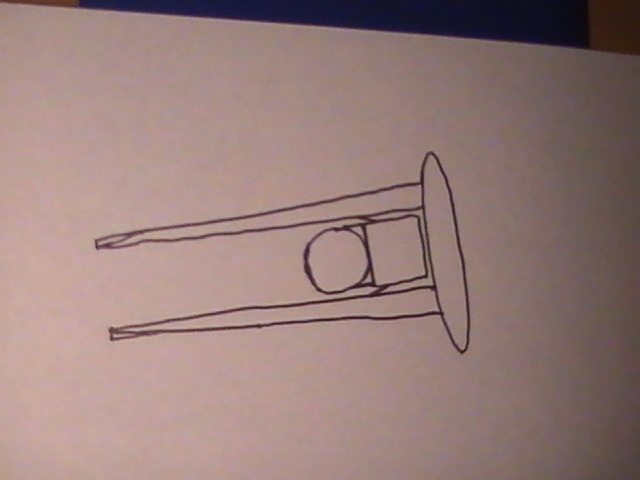
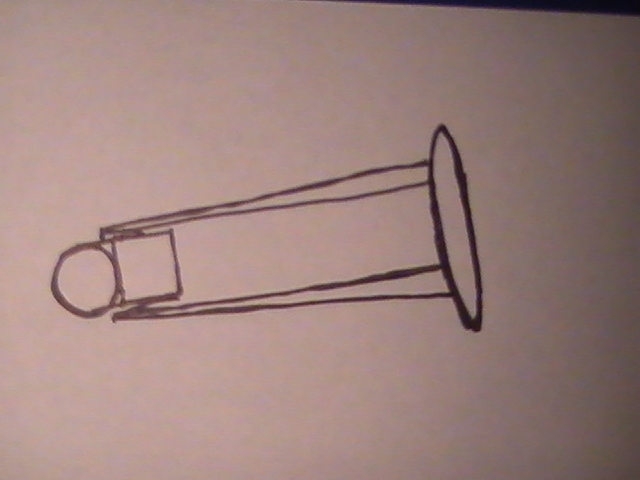
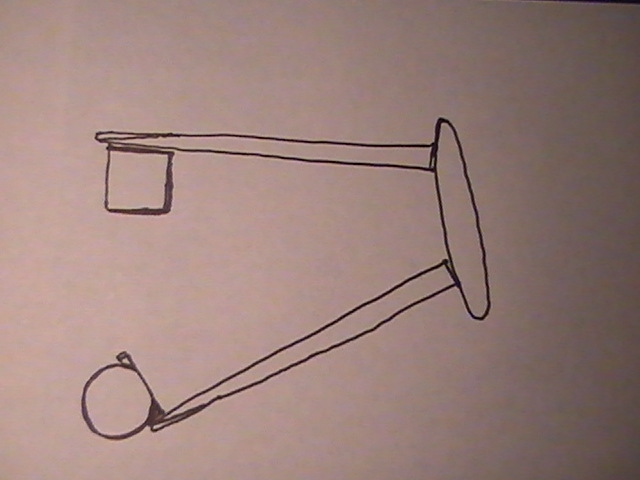
        Fabricating multi-thousand ton alloy discs hundreds of feet across on the Moon would be the beginning of a golden age of space exploration. The larger the “engine” in a pulse propulsion system (it is actually just a big dumb piece of metal) the more efficient it becomes. Isp’s soar into the tens of thousands as the discs approach a thousand feet in diameter. The reason is simple; a hydrogen bomb is simply a fission bomb of a certain size with deuterium and tritium added. A few teaspoonfuls of these elements and the power of the bomb doubles and triples.

        A half a century after Freeman Dyson and Ted Taylor studied the concept of these real life flying saucers it is still largely unknown to the public. Due to the counter-intuitive aspects of using nuclear weapons to push a spaceship through space it is usually overlooked in any survey of propulsion systems. This is the very definition of ironic as it is the only practical off-the-shelf means of interplanetary travel for the foreseeable future. It could be used to lift truly immense payloads off the surface of the Moon.

        The first is to use robots as companies like Moon Express are exploring. It is possible that semi-expendable robot landers will be able to ferry water up to empty upper stages in lunar polar frozen orbits. If this proves practical then a thriving industry in cislunar space can be established without even landing humans on the Moon again.

        The second is to find super large lava tubes theorized to exist in certain areas. These tubes may be very large- so large that small cities can fit inside them. This would allow humans to move right in with inflatable structures but would require human-rated landers. Because these tubes are not likely to exist near any of the polar ice deposits then a way to transport water from these polar regions to the tube sites will also be required.

        The third avenue was proposed by Gerard K. O’Neill and had a minimal human presence on the lunar surface using electromagnetic rails guns to launch vast amounts of building materials into cislunar space for constructing artificial spinning hollow moons. The ice on the Moon may make this even easier by using Jules Verne gas guns to fire large payloads of ore and water towards space factories.

        Ideally all three avenues will be exploited and support each other. Eventually beam propulsion would be used for travel in the vicinity of the Moon and finally to enable millions to migrate to space colonies from Earth. The SLS is the first step and succeeding iterations of Super Heavy Lift Vehicles will eventually generate thrusts triple and quadruple that of the original.

        “Do we intend to operate in the current mode of custom-built, one-off missions or should we instead develop a robust, continuing space-based transportation system, one that can be used to accomplish a wide variety of missions and activities?” Excerpt from Paul Spudis’ article in Air and Space Magazine.

        Dr. Spudis mentioned “one piece of an overall space strategy that is currently in complete disarray”, and that “one piece” that has always really bugged me.

        If the private space god had started with something larger than the maritime equivalent of a canoe I would probably be a true believer. But…..the reality is the building block of this NewSpace “revolution” is a very low-powered mediocre engine that severely limited anything that could be accomplished from the start. We can see the consequences of this in a vehicle that violates the KISS principle 27 times over. I would add the miracle of propellant crossfeed is the guarantor of the optimistic payload and that feature does not appear to be forthcoming.

        When I was 11 years old NASA studied that one piece of an overall strategy that I believe is critical to any effort to expand humankind into the solar system. The present 5 segment SRB at 3.6 million pounds of thrust is the most powerful booster on Earth- but a reusable booster surpassing this awesome device with a much higher thrust and Isp is what is needed.
        I call it “the methane monster.”

        http://ntrs.nasa.gov/archive/nasa/casi.ntrs.nasa.gov/19720015132.pdf

Letters to Paul

  • “-the skills and technologies needed to acquire and use off-planet resources-“to launch tons of water from Earth is to completely miss the point of attempting it—we are learning how to “cut the umbilical cord”- Excerpts from Paul Spudis’ article in Air and Space Magazine.

    Any dialogue with the NewSpace sycophants presently hijacking the discussion about space exploration inevitably devolves into their screaming cheap. When presented with any plan that requires government resources or things outside the capability of billionaire hobbyists the NewSpace mob wails and gnashes their teeth, crying out it is just too expensive and a waste of tax dollars.

    This mantra is incredibly frustrating because these creatures claim to be all about space exploration but in reality are anti-space and have an agenda that goes nowhere but LEO- which is not really space at all. They will make noise about Mars and making us a “multi-planet species” yet when it is actually shoved in their face and they can’t avoid addressing the hard questions they default to snarky veiled insults and complaining on libertarian principles. A shaky facade as their flagship company is the poster child for corporate welfare.

    Any long duration missions into deep space will require massive shielding and artificial gravity. This is the dirty secret NASA does not want to talk about. No matter how willing to permanently damage their bodies astronauts are the decision is not going to be theirs- and nobody is going to sign off on profoundly debilitating and dosing human beings just for a T-shirt. The damage is certain and so is that damage being a showstopper.

    Sending humans on multi-year deep space missions automatically means true spaceships with well over a thousand tons of water as a cosmic ray shield and an artificial gravity system. This automatically makes chemical propulsion useless for human interplanetary missions- only nuclear energy will work. And it may as well be stated in no uncertain terms- only one form of propulsion is viable- nuclear pulse propulsion. This means hydrogen bombs and those cannot be used inside the Earth’s magnetosphere, which extends almost to the Moon.

  • Falcon light blew up as I recall on its 19th flight while ULA just went one hundred in a row- without blowing up. You get what you pay for. The cheaper-is-better crowd continues to proclaim a new age of cheap lift and just don’t get it: when the space station to nowhere closes shop, NewSpace is over. Low Earth Orbit (LEO) is not space. The mob of Ayn Rand worshipers who are anti-space, anti-NASA, anti-government, while posing as good ole boys waving the flag, have done more damage to space exploration than both shuttle disasters.

    As the ISS deteriorates it costs more and more per year and very soon there will be a call to pour extra billions into this hole in LEO. Lashing together 3 hobby rockets to carry more junk up there to go in circles- going nowhere- is just more corporate welfare. The ideological war between those scamming taxpayers to continue this sham and those supporting Beyond Earth Orbit (BEO) operations with the Space Launch System (SLS) is real. The ice on the Moon and the Space Launch System to reach it should be the central focus of all true space advocacy.

    NewSpace is the enemy. I have said it for years and have been banned from almost all the popular space forums for saying so. The time is coming when that sordid mess also known as “private space” and “commercial space” will either be exposed and rejected or finally and completely ruin any near term possibility of human beings again traveling in space. Abandoning LEO and funding more tooling and workers for SLS cores at Michoud is the only hope. A public works project to establish a permanent base on the Moon is the worthy goal- not LEO tourist stations and boot prints on Mars.

Propaganda

Op-ed | Humanity’s Outpost on the Edge

LEO is “90 percent to anywhere in the solar system.”

What a farce. And I am banned from making any comments on this site.

http://www.thespacereview.com/article/2774/1

“For better or worse, the Apollo and shuttle days are gone, forever. But that is not a bad thing. We now have private enterprise taking over. There is now big money in space, in the form of minerals, energy, and microgravity-made products, to name just a few. Today, with the shuttle out of the way, private launch companies are moving into the fold, with much lower launch costs. That allows other interests, such as energy, asteroid mining, and space tourism, to take advantage of this new opportunity. The time for the space entrepreneur has arrived-”

Unbelievable. And I am banned from saying anything on this site also.

It is so sad. I may have to give up on ever seeing humankind leave Earth.

Interplanetary Missions

tumblr_mpqkvxYt371qbn5m1o5_1280

By Gary Michael Church

Triton is my favorite moon and it is so far out there I always think about how long it would take to get there.

Earth escape velocity: 11.2 km/s
If each H-bomb can impart 100 mph then 1000 bombs can provide 100,000 mph. Using this figure for travels to icy bodies in the outer system a rough one way travel time can be estimated.

Launch point outside of Earth’s magnetosphere- lunar orbit

1. Moon 2.380 km/s =4.70 times less escape velocity than Earth

Asteroid belt

2. Ceres  0.510 km/s   approximate travel time 120 days/4 months

Jupiter system 200 days/ 7 months

3. Ganymede  2.741 km/s
4. Europa 2.025 km/s
5. Callisto 2.440 km/s (outside of Jupiter’s radiation belts)

Saturnian system 360 days/ 1 year

6. Mimas 0.159 km/s
7. Iapetus 0.573 km/s
8. Titan 2.639 km/s
9. Rhea 0.635 km/s
10.Dione 0.510 km/s
11.Tethys 0.394 km/s
12.Enceladus 0.239 km/s

Uranian system 2 years

13.Miranda  0.193 km/s
14.Ariel 0.558 km/s
15.Umbriel 0.520 km/s
16.Titania 0.773 km/s
17.Oberon 0.726 km/s

Neptunian system 3+years

18.Triton 1.455 km/s (around a 7 year mission to visit my favorite moon round-trip)

Plutonian system 4+years

19.Pluto  1.229 km/s
20.Charon 0.580 km/s

Triton_Earth_Moon_Comparison
Moon, Triton, Earth

The Coming Zeppelin Satellite Apocalypse

credit unknown- please leave comment and I will accredit

Gary Michael Church

The dirigible airship, the Zeppelin, may well spell the end of the satellite industry within a decade or two. Using new technology to make safe (with a double hull nitrogen ignition barrier), manipulate, and utilize the hydrogen lifting gas, these airships are the ultimate telecommunications platforms. The superiority of these stationary platforms hovering at 100,000 feet for months on end to the proposed networks of thousands of tiny satellites is obvious. When these airships reach a critical number and provide global relay capability even the geosynchronous satellites will suddenly be completely and hopelessly obsolete. With no satellites to launch the satellite launch industry will die. One factor driving this coming disruption is anti-satellite brinksmanship and the accompanying space debris issue. Concerns that global telecommunications could suffer an overnight catastrophe can be addressed with a relatively cheap and easy to replace/repair/upgrade airship fleet.

The satellite launch industry is headed for collapse and because airships can be constructed so quickly and are such a low risk technology the rapidity of the satellite industry collapse will be…..astounding.

The present network communications satellites can and should be replaced by high altitude dirigibles. A fleet of dirigibles hovering in the 100,000 feet altitude range and relaying information to each other from horizon to horizon across the globe. These different national fleets would essentially replace all satellites currently in use for telecommunications, navigation, and earth observation and provide much more effective cell phone and internet services due to being stationary and only 20 miles in altitude.

1. A double hull with a thin outer hull filled with nitrogen would provide an ignition barrier against any Hindenburg-type catastrophe. These dirigibles become more efficient the larger they become and in sizes comparable to the U.S. Navy Airships Macon and Akron have payloads of over one hundred tons. That payload using 1920’s technology can now be traded off by lifting less mass for very high altitude performance.  If desired, dirigibles could be semi-autonomous and also accommodate small crews in pressurized cabins for specialized missions. These crew cabins could shuttle to these dirigibles in the air by capturing an arresting wire and detaching from a carrier aircraft or detaching from the dirigible and using a ram-air wing to descend and land.

2. Manipulation of hydrocarbon fuels and water as a hydrogen source and utilizing the hydrogen in reversible fuel cells, along with solar cells operating above the clouds at altitude, would provide months-long endurance. The large hydrogen filled structure could be utilized to protect electronics from any conceivable disrupting effects- even a Carrington-level- event might be survivable.

3. The airships have a service life as long as satellites, and can be brought down periodically for maintenance, upgrade, and repairs, and sent back up. They can also be moved several thousand miles to disaster zones, and be air-refueled when needed in winter-dark latitudes. Considering the cost of a satellite, the cost of rocket launch for the satellite, and rate of failures, the cost of a relatively simple metal and fabric frame and associated systems for the same price equates to Macon/Akron size dirigibles with a much lower initial cost. Since airspeed would not be the primary need these dirigibles would more likely be circular in design, even a fat-torus (doughnut) shape may suit some radar configurations.

Revolutionary concept application: Eventually, these dirigible hulls could be structurally connected to form an airborne-very-large-rectenna (cloud city!) for microwave power transmission from Space Solar Power satellites. The energy could then be concentrated into a tighter beam, with a much smaller danger zone incurred for transmission of energy to the surface of Earth.USSMacon2

Amazon Women on the Moon

Gary Michael Church

In my view Paul Spudis has the correct solution; he has on several occasions written about a “Space Navy” as a separate agency. Having been in on the birth of the Department of Homeland Security I know this is not impossible. The DHS was brought into existence and I was made a part of it in a jiffy. The question is how to justify such a Human Space Flight-Beyond Earth Orbit organization? There are three reasons;

1. The nuclear deterrent is deteriorating and all three main players in the game, America/Russia/China have it in their best interest to not have weapons on hair trigger alert minutes away from their targets. I described moving the weapons into deep space in “Seven Steps to Space Travel” on this blog.

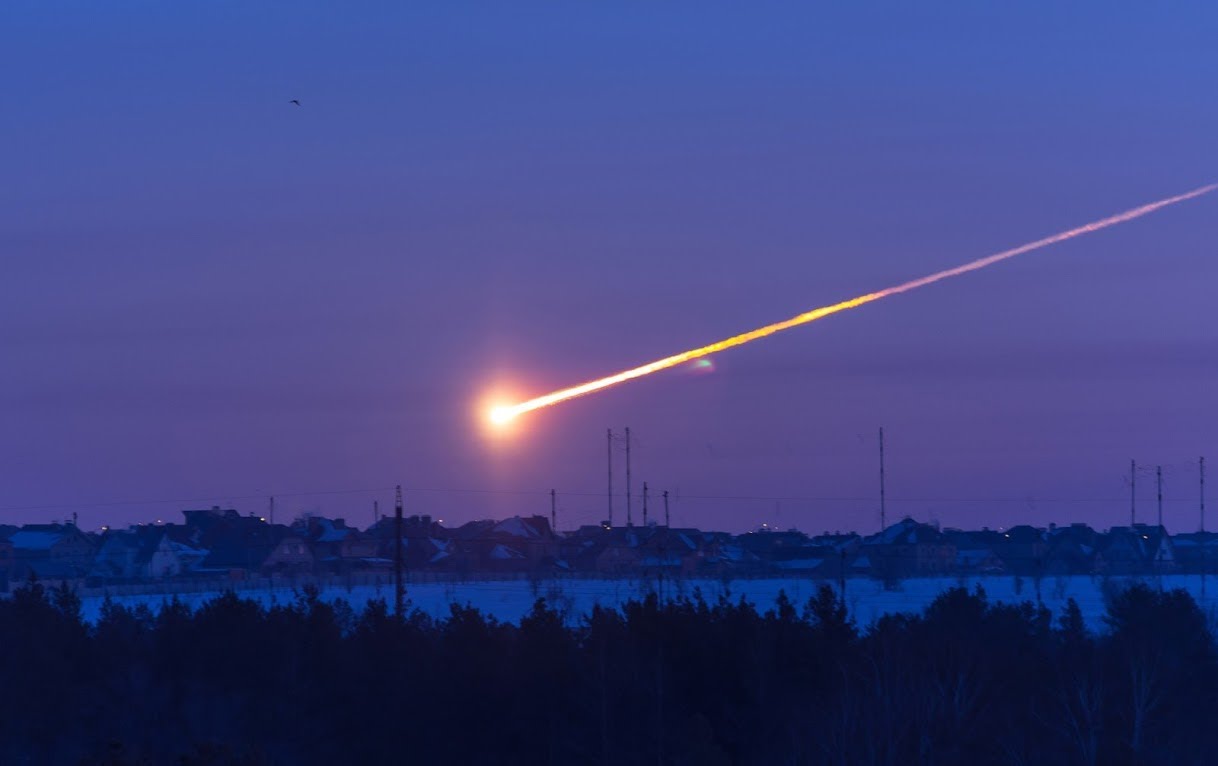
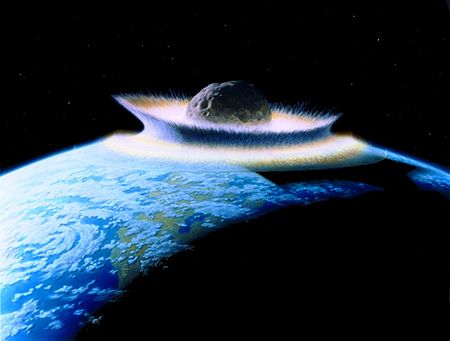
2. Planetary protection- Chicxulub/Tunguska/Chelyabinsk events are a good enough reason by themselves and all three nuclear nuclear powers can task their spaceships to intercept impact threats.

3. Survival colonies. Since it will take lunar resources to build a fleet of nuclear propelled and armed spaceships it only makes sense to have lunar colonies with women and sperm banks (Amazon women on the Moon) in case a global pandemic wipes out the human race. It sounds crazy but….yes, I am talking about all of them being young women. It only makes sense.

iris-chang-photoW
The Warrior

And of course these spaceships can do some exploring. If you have such Amazon-crewed space battleships out there the astro-cosmo-taiko-femnauts might as well go somewhere and Mars is actually a poor destination if you have the capability to take some mini-subs to the ocean moons of the gas giants.

Cosmic Ray Rats

scientificamerican0306-40-I3
credit: Scientific American

Gary Michael Church

The cosmic ray rat story is probably an important benchmark in the history of spaceflight that very few people are picking up on.

http://www.sciencedaily.com/releases/2015/05/150501151608.htm

As a troubleshooter I see clearly the flow chart on Human Space Flight-Beyond Earth and Lunar Orbit (HSF-BELO) does not have many branches. Dashing back and forth through cislunar space to and from the Moon a half dozen times almost ended in disaster due to a solar event. Few people are aware of how close we came to losing an Apollo crew to a solar storm. The sanctuary penalty for these short duration storms is bad enough but for long duration multi-year missions the seemingly impossible obstacle to overcome is cosmic radiation.

The only solution is massive shielding- and artificial gravity to address the lesser though also serious problem of zero gravity debilitation. The mass penalty for the thousand plus tons of cosmic ray shielding and artificial gravity system means chemical propulsion is essentially useless for any HSF-BELO-capable-conveyance. Only nuclear energy will work- and to add insult to injury there is only one practical form of nuclear propulsion to be found in nuclear pulse propulsion. Atomic bombs. Actually, hydrogen bombs are the most efficient and the smaller fission devices are second best.

This inconvenient truth is so shocking to space advocates they automatically go into scornful denial. Lifting a thousand tons of tap water out of Earth’s gravity well is a non-starter. Lighting off bombs anywhere in the magnetosphere is not going to happen. Those without a simple understanding of the rocket equation and basic spaceflight principles will argue for the “flexible path” with various NewSpace propaganda slogans but these are easily refuted and then no one has a thing to say.
The silence is deafening.

While NASA publicizes LEO and Mars efforts and pushes entrepreneurial solutions any real progress in space exploration requires the anti-thesis of this policy. Abandoning the dead end of LEO, ignoring Mars for the foreseeable future, and returning to the Moon with a public works project on a never before seen scale is the only logical path.

The prophet of space colonization, Gerard K. O’Neill, figured out the Moon was the master key to open the door to space in the 70’s. What radically changed the situation even more in favor of developing the Moon was the 2010 evidence of ice deposits.

The ice on the Moon is the enabling resource that should be the central focus of all space advocacy. The only place to acquire the water-as-shielding, assemble, test, and launch nuclear missions is the Moon. It follows that the only revenue generator in space for now is the GEO satellite industry- and the only place to assemble water-shielded human-crewed space stations to supercede the present satellite junkyard is in lunar orbit using Super Heavy Lift Vehicle wet workshop upper stages. The assembled stations can transit back across cislunar space into GEO and capture the over 100 billion dollar revenues of that industry. This is the path to expanding the human presence into space- not LEO tourism. That this path bypasses LEO and is the kiss of death to the NewSpace business plan is the most inconvenient truth of all.

Back to the Moon

800px-von_braun_1952_space_station_concept_9132079_originalBy Gary Michael Church

By the end of the decade the first Gnome mission was launched. The bunker buster H-bombs were all successful in excavating artificial caverns. In concert SLS wet workshop missions carrying robot landers arrived in lunar orbit one after another at eight to ten per year. The robots descended onto ice deposits to collect water and then shuttled loads up to the empty stages. In due course the first workshops had their radiation shields partially filled and were ready for astronauts to arrive and establish space stations in lunar orbit.

The first task of the astronauts was to connect and put into operation the tether systems that would provide artificial gravity. The first pair of shielded workshops were slowly spun up and tuned with dampening loads along the tether cables. Once in operation the astronauts now looked out their viewing ports through several feet of water at the shifting and revolving Moon and stars. With their sanctuaries providing Earth gravity and near sea level radiation levels the teams began assembling the continuing flow of workshops into telecom wheels.

On the lunar surface the robots began clearing debris from the cylindrical blast channels. They would eventually reach the bottoms of the excavations and the job of removing the contaminated material would begin. Within the second decade multi-thousand foot deep facilities would be cleared, cleaned, and filled with air. Several more years would be required for manufacturing and nuclear processing operations to ramp up. The two major products were metal alloy stock and solar energy assemblies.

Twelve and a half years after the first, the 100th wet workshop entered lunar orbit. The initial telecom wheels had transited across cislunar space back to Earth. A geostationary infrastructure of human crewed wheels would eventually replace all telecommunication satellites. The next generation of Super Heavy Lift Vehicles with over 30 million pounds of thrust came into service lifting larger second generation workshops at double the launch rate. The second half of the 21st century would see an ever higher launch rate from Earth and millions of tons of solar power satellite components lifted from the lunar surface using hydrogen bombs in pulse propulsion systems.

Once the microwave stations established their power beams the first of the great single stage beam propelled Spaceliners lifted from Earth on their one way lunar voyages. In those first years thousands of people left Earth and as the exodus accelerated, hundreds of thousands. The space stations to house these workers multiplied and were repeatedly recycled into ever larger artificial spinning hollow moons. A period of rapid expansion ensued. In ever lengthening lines these city sized spheres led and trailed Earth in solar orbit. The population on Earth began to decline during the next century.

The 22nd century was the golden age of space travel as gigantic beam propulsion bases were constructed on the far side of the Moon. The power beams were constantly employed accelerating and decelerating artificial moons as they embarked and returned from multi-year mining expeditions. The raw materials, combined with bulk lunar resources, created more city moons. Some new spheres ventured outbound while others joined the long line arcing from Earth around the Sun. By the end of that century Earth became a vacation and research destination with a few tens of millions of tourists and scientists wandering the largely uninhabited continents.

Seven Steps to Space Travel

Gary Michael Church edited 2024

The methodology for civilization expanding into space is to be found in a triad of indispensable human endeavors: defense, communications, and energy. Nuclear deterrence has precluded a third world war for three quarters of a century. Telecommunications technology has provided a stabilizing continuity instrumental in preserving this relative peace. The ever-expanding energy industry continues to maintain the infrastructure and enterprise of civilization. Fossil fuels providing fertilizer, pesticides, and mechanical horsepower have allowed humankind to reach the present population soon to exceed 8 billion and maintain a state of equilibrium. In the 21st century this triad must relocate into space if looming breakdowns in the mechanisms of civilization are to be averted. Space is where diminishing deterrence will be restored, where transparency will be communicated and globally refined, and where energy is for all practical purposes limitless.

1. Step one is to DEFINE what space is and how travel through this medium is to be classified. 100 kilometers/62 miles is one common measure used, but this number and others is mostly arbitrary. Low Earth Orbit (LEO) has little in common with outer space because underneath the Van Allen belts humans enjoy protection from solar storms. Though analogy is much abused concerning space, it would be fair to characterize LEO as a freshwater pond and above the Van Allen belts as the deep ocean. LEO is not really space. The more accurate demarcation line is Geostationary Earth Orbit (GEO) over 23,000 miles above the surface. The often-quoted claim that LEO is halfway to anywhere in the solar system is an erroneous halfway marker that should be reassigned to GEO. In 1968 human beings left LEO behind and then retreating after the end of Apollo. If LEO is not space, then the actual space age only lasted a few days short of four years. Space travel beyond LEO to at least the cislunar sea is properly defined as Human Space Flight Beyond Earth Orbit (HSF-BEO).

2. Step two is to CLASSIFY the conveyances used for space travel. The two most misused terms in this respect are “Spaceship” and “Space Station.” Providing a Near Sea Level Radiation 1 Gravity (NSLR1G) environment is the key enabler for long duration Human Space Flight Beyond Earth Orbit. Massive shielding and centrifugal artificial gravity (most likely using a tether system) are the basic requirements for any HSF-BEO missions. These inescapable requirements are due to the heavy nuclei component of galactic cosmic radiation and zero gravity debilitation. True spaceships will ironically resemble ships at sea in that their crews will be wrapped in a bare minimum of several hundred tons of water, and since long duration missions will require appreciable living space, thousands of tons of water. The terms Spaceship and Space Station should only be applied to these rotating-with-basic-shield constructs. By this definition spacecraft and LEO platforms are all that have ever been built. It follows that mating a propulsion system to a space station changes it into a Spaceship and vice versa. How to shield these stations and propel these ships is a sea change in thinking about space travel that must occur if Human Space Flight Beyond Earth and Lunar Orbit (HSF-BELO) is to ever become a reality.

3. Step three is to clearly EXPLAIN the prerequisite technology to the public. The basic principles and realities of spaceflight are not difficult to comprehend if explained in practical terms. Unfortunately, without standard definitions and classifications the language concerning LEO, space, spaceships, and space travel is very confusing. The unavoidably massive space radiation shielding can realistically only be acquired from the six times shallower gravity well of the Moon. The ice on the Moon should be the central focus of the Human Space Flight community. There is only one realistic method of propelling such a kiloton range water shield on interplanetary missions: nuclear bombs. These hard facts are quite a shock…at first, but the denial stage does wear off. The technology has existed for decades. The stark reality is going to the Moon to acquire shielding, assemble, test, and launch nuclear missions is the only path to interplanetary travel. The launch abort hardware exists for safely transporting fissile material to the Moon where the ice-derived-water-shielding is. There is certainly no shortage of plutonium for nuclear pulse systems.

4. Step four is to POPULARIZE the end goals of a Human Space Flight program. The very best proposal to date is Gerard K. O’Neill’s plan for space colonization. The enabler in O’Neill’s vision was solar energy beamed to Earth from GEO arrays effectively ending global poverty and climate change. The only way to remedy the effect of greenhouse gases on the ecosystem is to acquire the energy to run civilization outside of that system. That means beaming the energy down from space. The same beams can eventually power Single Stage to Orbit (SSTO) launch vehicles. The revenue to reform the energy industry would come from a GEO Space Station-based industry. Satellite networks will inevitably collapse due to space debris if not replaced by a smaller number of efficient space stations. Wet workshop space stations originating in lunar orbit and transiting the cislunar sea to GEO can clean up this junkyard using “laser-broom” technology. More seed money for this future space plan would come from basing nuclear weapons off-world in deep space. This would serve to protect the Earth from asteroid and comet impacts as well as continue in their present role with far less danger of an accidental nuclear exchange.

5. Step five is to VALIDATE the funding for exploiting the necessary lunar resources to build the first true Space Stations in lunar orbit. When considering the staggering price tag of replacing the aging U.S. ballistic submarine fleet, the necessary Super Heavy Lift Vehicle launches (SHLV) become less daunting. Wet workshop lunar space stations only require a nuclear pulse propulsion or possibly nuclear electric system to transform them into true spaceships. Funding for all nuclear weapon delivery systems on Earth, submarines, missiles, and bombers could thus be diverted. By replacing the GEO network with Space Stations in concert with Spaceship construction the costs could be further reduced. The same nuclear devices used to propel Spaceships can possibly be modified to create lunar underground factory space if lava tubes are not available. A “Nuclear Moon” infrastructure could be used to lift from the lunar surface the immense solar power satellite arrays necessary to power civilization on Earth, or perhaps the initial arrays before mass drivers and libration point fabrication. Beam propulsion might eventually drastically lower the cost of both lunar lift and the cost of launching from Earth allowing for ever larger numbers of space travelers.

6. Step six is to DISCARD unnecessary programs that the move into space will make obsolete. Hundreds of billions of dollars are spent maintaining legacy nuclear delivery systems vulnerable to a first strike, dangerously compromising deterrence. Almost all of these systems are past due replacement. Missile silos are precisely targeted, submarines can no longer hide, and bombers are no longer kept in the air round the clock. Spaceships will not be any more expensive than these delivery systems and have a great deal of technology in common with nuclear submarines. Unlike Earth based systems, spaceships will not have minutes to launch but more likely months. In addition, the planet itself can be defended with these spaceships from asteroid and comet impacts. Beside the nuclear defense industry, the telecommunications and ultimately the energy industry are most efficiently entirely space-based. Human-crewed spaceships and GEO space stations are the key to this new infrastructure. This is the opportunity to vastly improve conditions for humanity on Earth by the end of the 21st century.

7. Step seven is LEGISLATE a long term program. There is no downside to expanding the human presence into space. As the defense/communication/energy triad is gradually moved off-world the benefits to humankind will manifest in direct proportion. Slowing the hair-trigger nuclear response of deterrence will be complemented by Space Station direct human visual observation. This will greatly reduce the present nuclear inventory and support structure resulting in huge defense savings. The global connectivity provided by GEO space stations will be an order of magnitude improvement and enable a wireless world. The end-game of space solar power virtually eliminating fossil fuel use on planet Earth is the precursor to lowering the population. The promise of space colonization is to actually create artificial hollow moons from lunar resources and homes for tens of billions of people. The promise of beam propulsion is cheap SSTO lift into cislunar space on the scale of commercial air transportation. The people of the United States and the rest of the world will revel at this vision of a bright future.

In conclusion, the most powerful device ever created by humankind, the H-bomb, is the only force capable of propelling a spaceship through interplanetary space. Nuclear pulse propulsion was endorsed by a cadre of celebrity scientists including von Braun, Sagan, and Clarke. The concept was also validated by the work of the originator Stanislaw Ulam, Freeman Dyson and Theodore Taylor. The Reagan Strategic Defense Initiative added mountains of classified research applicable to the directed energy devices used in pulse propulsion. Space Radiation shielding on a massive scale that provokes shock and dismay is unavoidable. However, the main difficulty with bomb propulsion is building spaceships on a small enough scale, so the two problems solve each other. The larger the mass the more efficient and economical pulse propulsion becomes. Lighting off nuclear devices near the Earth or inside the Earth’s magnetic field is unacceptable due to fallout. This is no drawback since the lunar-ice-as-shielding this powerful system will push is to be found on the Moon and outside the magnetosphere.

Orion Mark 2
Image from “Project Orion, the true story of the atomic spaceship”, by George Dyson

The logical sequence is to start by replacing the present GEO satellite junkyard by assembling wet workshop space stations in lunar orbit. These water-filled stations can then be transited back across cislunar space to GEO or completed as spaceships. The stations will generate revenue to defray the cost of the nuclear armed and propelled spaceships replacing the obsolete Earth deterrent. A few pounds of plutonium in the palm of a gloved hand holds the same energy carried in a fleet of supertankers. The only efficient way to release this energy outside of a star is in the pulse of an H-bomb. The counter-intuitive constructive harnessing of this destructive event is the key to space travel and colonization. The same devices that can push a water shielded spaceship through interplanetary space can deflect any asteroid or comet threat to Earth. If natural “super-lava-tubes” are not found these same devices can create underground lunar factory space to manufacture millions of tons of solar energy components. The same devices can lift those millions of tons into cislunar space from the surface of the Moon to power civilization on Earth.