Whatever happens, whether you succeed or fail, people with high expectations always feel better. They usually attribute success to their superior ability and failure with “bad luck.”
The pure act of anticipation makes us happy. We enjoy imagining the better days ahead. People with mild depression are actually more realistic than healthy individuals.
Optimism changes reality because it acts as a self-fulfilling prophecy. Optimism leads to success and health. If we expect the future to be bright, stress and anxiety are reduced (and we perform better).
Experiments have shown if people believe they have a ten percent chance of getting cancer and then are told the true figure of thirty percent, when asked later they will say they have an eleven percent chance. This profound (and quite common) self-deception is the feature in human behavior that could lead to the end of our species. Most people can understand quite well the likelihood of divorce is forty percent and the likelihood of cancer is thirty but they refuse to believe those numbers apply to them.
The more optimistic you are the less likely your brain is to respond to negative information. Firefighter fatality investigations often contain statements such as “we did not think the fire was going to do that”, even though the facts indicated it would. We tolerate the optimism bias in our everyday life but when it influences decisions that affect the future of the human race we are in reality vastly increasing the likelihood of our extinction.
We do not believe any highly lethal pathogen will result in most of the human race dying but the COVID-19 virus is the perfect example of this optimism not necessarily being warranted. If the virus had both a high mortality and been highly contagious we could be looking at the collapse of global infrastructure and subsequent death by starvation, as well as disease, of most of the human race. We are also quite happy believing there is no dinosaur killer on a collision course with our planet but…it could happen tomorrow.
COVID-19 appears to have a mortality rate of 3 to 4 percent and the Chelyabinsk (70 feet in diameter) airburst injured around 1,600. The Ebola virus has a 90 percent mortality rate and the Chixculub impactor that killed the dinosaurs was between 7 (asteroid) and 50 (comet) miles in diameter. We believe that somehow these percentages that minimize the effect of events like pandemics and impacts on our existence will always be on our side. It is crazy to believe that.
When considering “deep time” (geologic time) and statistical probabilities, what we would see if a 100 percent lethal pathogen (such as a genetically engineered biological warfare agent) or a 100 mile diameter asteroid impactor were to render us extinct, is just a small spike in the infographic. Our optimism bias makes that graph invisible to us.
We have the ability, at this moment in history, to direct vast resources at threats to our species. Instead, we direct vast resources at marketing shoes and pet products and allow a tiny minority of sociopaths to amass unimaginable wealth. As I have stated many times; millennia in the future, aliens studying our dead civilization will shrug and conclude, “they were too stupid to survive.”
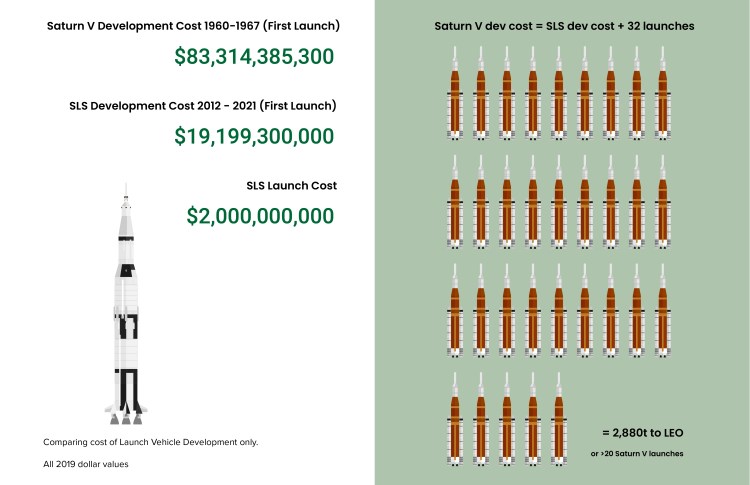
The optimism bias also applies to engineering and public works projects and it is accepted that cost over-runs are somehow inevitable. In reality a simply formula to correct for the optimism bias in these projects would bring most of them in under cost. The most interesting project to cite in this category is, in my view, the SLS.
Infographic: r/SpaceLaunchSystem
Thirty-two SLS launches might result in assembling a true spaceship, the first of many to come, that would be able to use nuclear devices to deflect any impact threat. By increasing the SLS launch cadence to 6-8 missions per year (by abandoning LEO and Mars and redirecting that funding) a cislunar infrastructure could be created that would ultimately result in independent off-world space colonies immune to terrestrial extinction level events. Then we would no longer be too stupid to survive.
The Gateway never really made sense when the radiation environment makes any long duration missions impractical without a massive cosmic ray water shield. Eugene Parker explained this for the layman back in 2006 in a classic popular science article published in Scientific American: Shielding Space Travelers.
In combination with dosing is micro-gravity debilitation which also causes permanent damage and there can be no real progress in Human Space Flight until this issue is settled. Especially for young females, a near-sea-level-radiation one gravity environment is the prerequisite for multi-year missions. There is no way around it.
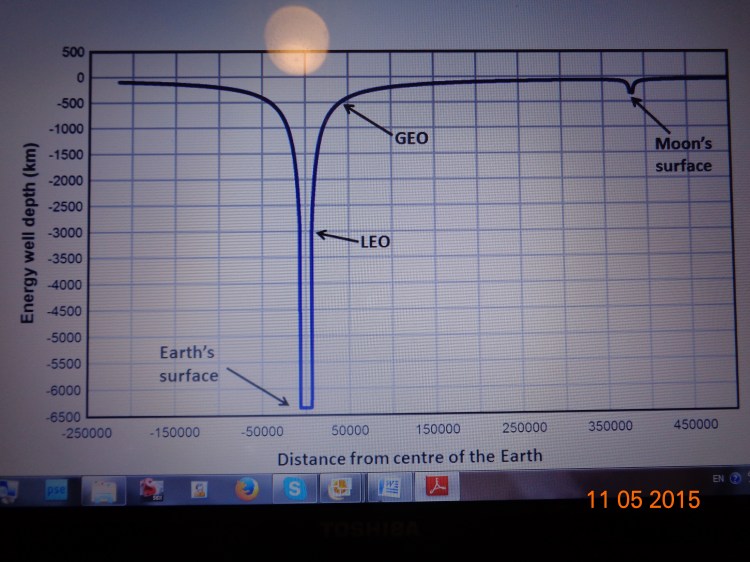
Dosing and debilitation is best addressed by way of three techniques. The first is a massive water shield, as detailed by Eugene Parker, and the obvious structure to contain this shield is a wet workshop, and better yet, a double envelope “Fat Workshop.” It follows that a tether system several thousand feet long to provide artificial gravity would use these workshops- which are already built to withstand max-Q launch forces. The third technique is to bring the water shielding up from the Moon using robot Landers. Bringing these thousands of tons of water up from the Moon requires 22 times less energy than bringing it up from Earth.
The Fat Workshop is going to need a Super Heavy Lift Vehicle in the 130 ton payload (or larger) range.
At this point in our likely short history, our only plan is greed. Spoiled rotten children bullying and lying to acquire more toys than their siblings. Greed has become our parent, our narcissistic enabler, our rai·son d’ê·tre. The agent of greed, money, is the god of this world. Speculation, or gambling, or the market, or whatever term is used, is the den of thieves that ultimately destroys any hope of progress. Why work when you can be lucky? It is stealing without breaking the law. It is the miracle of something from nothing. Put some money, a little bit of your god, into it- and you get more back from nowhere. It just magically goes into your pocket. The choice is to be a dumb worker or a clever thief. And this is what will end our species.
It may be that greed is the filter everyone is guessing at concerning the Fermi Paradox. Evolution will eventually generate intelligent life, but to evolve, a finite lifespan is required. A species of conscious beings require millions of experiments to come into existence and this requires those previous millions to pass into non-existence. The self-defeating feature in this scheme is that conscious species retain that same mechanism which caused those millions to leave the stage: death. Since self-aware beings cannot accept non-existence, the one cancels the other out in the larger picture. We don’t care about the future because we subconsciously know all we get is what we can acquire in our own short life.
Children seem to be the only moderator in this drama as they do lend meaning to it all. That some people do not care for children is evidence we are programmed to love our offspring. I don’t mind being designed to love my daughter and granddaughter- it is one of the few things in this life I am at peace with. Extending that drive to all children, and because of our intelligence, to all people, we have a force that drives civilization to conform and cooperate instead of self-destructing by predation and zero-sum competition. Sadly, the cycle of empire, of greed corrupting and destroying mighty nations throughout history, leads anyone paying attention to the conclusion that as a species we will not survive this for much longer. We will not be able to change this cycle of destruction until we change our individual cycle of destruction. As long as humankind fails to effect an individual indefinite lifespan we are likely doomed as a species.
The original reason I became interested in space travel was due to this lifespan problem. The critical feature of traveling to other stars is time and if a person can be placed in suspended animation then that problem is solved. I believed a quarter century ago freezing people was a completely viable prospect. The technical challenges to lowering the temperature of microstructures without damage are simply not that difficult. If it becomes practical to freeze humans without damage and revive them decades or even centuries later then…everything changes. The single most important event in human history. I call this development “The Great Rescue.” Maybe I should call it “The Big Freeze.”
The man who could have taken humankind to the farthest reaches of the solar system is gone. He was a personal hero of mine due to his work on Nuclear Pulse Propulsion and is the second named scientist in the Parker-Dyson-Spudis continuum.
I was never really a space enthusiast until 2003 when I read George Dyson’s Project Orion. The book profoundly changed my worldview. In 2006 I read the Scientific American article “Shielding Space Travelers” by Eugene Parker and this also shaped my view on space exploration in a fundamental way. The third most influential work I read was probably “Angle of Attack” by Mike Gray.
Of all the people in these books the most interesting was Freeman Dyson. One detail about his life that caught my attention was when, during World War 2, he advised the British to remove the gun turrets from their bombers to improve their performance and avoid being shot down. Those in charge did not accept the numbers Dyson gave them of course…and people died because of that close-mindedness. Dyson was “open” to the truth and did not let pre-existing bias distract him from the best solution. We need more of that if we are going to survive.
Converting the United States Military Industrial Complex into something that will create a sustainable future for humankind will be the great feat of history. Nothing impossible about it or even extremely challenging in terms of technology. It is what we should do as a species if we want our children and grandchildren to have any kind of a future. The problem, of course, is that minority of psychopathic neoliberals who happen to control most of the worlds wealth and want nothing to do with anything that does not give them even more god-like power. So we have something we should do and we have a stumbling block. And then we have Bernie Sanders.
The present Army Navy Air Force Marines establishment is about fighting wars here on Earth against other superpowers who really have no desire to watch the world economy crash and billions die in another global conflict. It is mostly a façade. The nations retain their militaries as a safeguard against any other power taking advantage of them. The United States maintains armed forces so far beyond what other nations do it is absurd and why we do that is fairly obvious- it is an industry that makes a lot of people rich. Those people and companies want to keep making money and anything threatening their gold mine is acted against swiftly.
The best strategy is thus to not threaten Military Industrial Complex (MIC) “wealth creators” but instead offer those players an alternative. That alternative is Space Based Solar Power (SBSP) using the Moon as the new industrial base to power planet Earth. Solar thermal towers with their mirror fields and molten salt storage are about the only practical technology for generating energy in a sustainable manner on Earth but unfortunately all the great deserts of the world combined are not going to enable a western standard of living for 10 billion people. And make no mistake, the only way out of this is to provide a decent standard of living for everyone on Earth.
While NewSpace ideology has caused inestimable damage to space exploration and colonization, the flagship company has at least popularized Vertical Take-off Vertical Landing (VTVL) as being the most efficient method of reusing rockets. It will likely be decades before reusing really large Super Heavy Lift Vehicles (SHLVs) breaks even economically but at least the Ayn-Rand-in-space-train-wreck has done something “not harmful.” Whether VTVL would have happened anyway if the shuttle boosters had been the originally specified pressure-fed ocean recovered type instead of solid fuel remains to be seen. I suspect with pressure-feds a variant of the shuttle would still be flying.
The way forward is a first stage at least half again as large as the Saturn V, landing on a ship at sea, as the first piece of hardware. Four large engines and a smaller central landing engine, will become the standard. Much like airliners have become a giant version of the original German ME-262 fighter, the standard rocket will become a larger version of the Saturn V. The second stage will fly around the planet and land back at the launch site using ceramic tile technology and one central engine and four smaller landing engines. And the third stage will be a wet workshop with the engine section doing a lunar free-return back to re-enter and land for reuse.
SHLVs from the U.S., from Russia, from China, with versions built under license by European and Asian companies, will largely replace the cold war toys and nuclear triad hardware still being developed or modernized. Warships and warplanes will no longer be the money-makers. The new Military Industrial Complex wealth creation strategy will be based on giant rockets. Lunar-water-shielded wet workshops will first go into Geosynchronous Earth Orbit (GEO) and then to the Lunar Cycler fleet and finally as spaceship crew compartments. Eventually the power stations will lift from the surface of the Moon and find their way to GEO where they will begin to beam carbon-free power down to planet Earth.
That is the Green New Space Deal.
Beyond changing over the Military Industrial Complex from Earth-based to space-based and powering planet Earth carbon-free there is the original colonization plan of Gerard K. O’Neill. In a hundred years the population of Earth will begin to decrease as beam-propelled space-liners leave daily for space habitats. Within a few centuries Earth will be a place to visit like a national park. Not only will Earth be a garden but immense spheres will be launched to other star systems centuries away. There are very few technical challenges to this bright future. In contrast, the road humankind is on now has a good chance of ending in extinction.
To paraphrase Jung, “It is the revolt of the powerless, the insatiable greed of the have-nots, and they are likely to gravitate toward powerful collective ideologies, mass movements, and institutions.”
A friend is currently taking a leadership class at her workplace and interestingly, someone fairly high up in her organization, way above her, is also attending. He proudly boasted of being a Capitalist and made statements typical of that worldview, such as, “If people are not happy what they are doing then I believe they should go where they will be happy. I want them to be happy.” In other words, if people disagree with the way he is overworking them (and she said he is definitely doing that) they can go to hell. Classic.
In the 20th century the three main ideologies in play were Communism, Fascism, and Capitalism. Communists had been scheming throughout most of the 19th century in response to the misery generated by the industrial revolution. The essential question concerning the human condition for millennia has been inequality, and at the turn of the last century, the Russian Revolution, the long awaited rising up of the worker, came about. The previous systems of aristocracies warring on each other, compounded by religious persecutions, had inevitably culminated in this anarchy brought on by industrial excesses. The resultant reordering of governments began near the end of the 18th century with the relatively successful American Revolution and disappointing French Revolution. The ancient Greek ideas of Democracy and Roman ideas of Republic were revived and codified in new declarations.
Communism was based on doing away with the question of inequality by doing away with inequality itself. Communism addressed property and this resulted in a totalitarianism whose main feature was poverty, famine, and concentration camps. Such camps, unknown to most people today, had been recently invented by the British to end the Boer War. Fascism was next and addressed race, or blood, as the measure of Darwinian inequality and this resulted in a totalitarianism whose main feature was genocide and extermination camps. Capitalism, which had run rampant by way of robber barons through most of the 19th century, was put on a leash in the U.S. after the 1929 crash by socialist forces, and this resulted in what has been described as “imbedded liberalism.” And then came the second World War.
The salient feature of Capitalism is, of course, greed. Or, instead of just naming that deadly sin, the code word “freedom” is often substituted. After World War Two the resulting Keynesian hybrid of a Capitalism carefully regulated by the state made America great. Communism was the great atheist enemy and the horrors of Fascism made these ideologies anathema but, unfortunately, Capitalism in its purest unrestrained Darwinian form, is now again dominant- and may destroy the planet.
The Robber Barons have returned but the industrial revolution is now running in reverse with jobs disappearing due to artificial intelligence replacing the minimal human oversight and basic hands-on required for automated systems. The industrial revolution grew by leaps and bounds in the immense market that was the world and now there is no more immensity to exploit. The only “resource” left to exploit is humanity itself.
The cult of Neoliberalism is a pernicious cult because it so blatantly makes money the god of this world. Everything must be made to turn a profit. The only commodity left to exploit becomes human labor in a kind of relational cannibalism. Populations must eventually be turned as close as possible back into those slaves that built the ancient world. Today, the day Trump was acquitted and Spartacus died, has shown the politicians to be true worshipers of Mammon. There is no longer any doubt.
There will be no second space age as long as there is a dollar to be made by NOT expanding humankind into the solar system. Future generations may mark this day as the one far more infamous than any in the 20th century.
The Doomsday Clock has been advanced and a possible global pandemic is spreading. And…there is the subject of Space Based Solar Power as the cure for climate change, which is just as important as Mutually Assured Destruction and another black death. Existential threats are a recurring theme on this blog as the reason space exploration and colonization should be the penultimate collective concern of the human race. The very first priority, which I have repeatedly stated, is a way to freeze human beings without damage. I am sure this puzzles some of my readers (I actually had ten visitors the other day!). Let me explain.
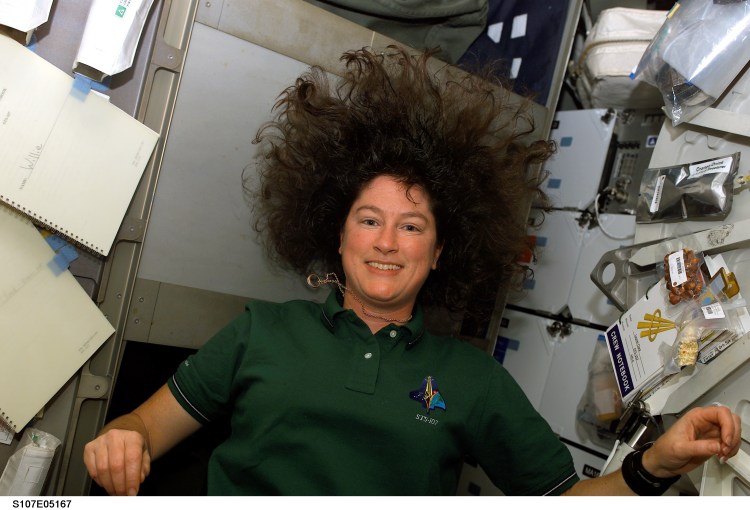
I am a not very impressive example of the human race and I understand that. Compared to someone like Laurel Blair Salton Clark, who was born about 6 months after I was, I am…not impressive.
image NASA
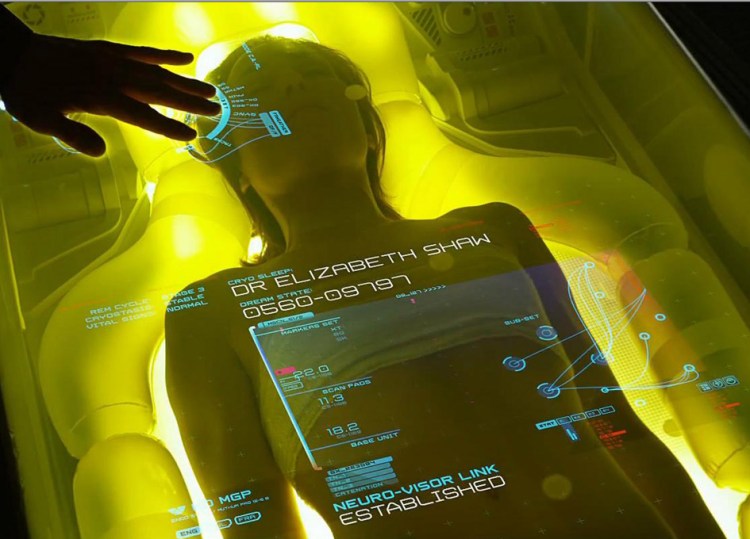
I remember happening upon a bio of her and how her amazing life story affected me. I have called myself a “simple machine” and likely this is the only facet of my existence that makes me remarkable in any way. My basic design might allow me to see our situation in a way you do not, and come to a conclusion that others simply cannot see through the clutter and structure of the human condition. It is with perfect clarity I see our problem as “simple” to troubleshoot. The Flow Chart only has a few branches. The Solution Box reads, “Freeze All Humans At Risk without damage to be Revived At No Risk years later.”
image Prometheus movie
I can expound on why this is the ultimate and immediate priority ahead of avoiding nuclear war, stopping a global pandemic, and curing climate change, but there seems to be some psychological mechanism that disallows human understanding. How do I remove that block? Nobody seems to get it.
image telegraph.co.uk
We are all on death row in this open air prison called Earth and in denial. Our sentence will be carried out in the near future. The philosopher Nietzsche spoke of fear and laziness as basic to human existence and adding on the interchangeable terms of denial and stupidity to the beginning makes for a convincing chain of cause and effect. We deny what we cannot accept and this failure is in reality a failure of intelligence. We are not as smart as we believe ourselves to be and all are lost in the forest but for the trees.
As I often write, an alien intelligence observing our extinction would not be surprised and conclude we were too stupid to survive.
As long as we are being marched to the gas chamber as individuals we are doomed as a species. Stopping death, at least delaying it indefinitely, is the turning point in human history where we go from being an ephemeron species to survivors. There are few technical challenges to inhibiting disruption of microstructures undergoing temperature change. And fewer dollars being spent on effecting that process.
What stupid creatures we are. But then again, no. Consider those who are intelligent enough to see another path…like David R. Criswell. He rightly points out that for the mind-boggling amount of money we have spent since 2001 on fighting in the Middle East we could be well on the way to turning the Moon into a giant solar energy plant to power Earth. But instead of leaders who support such a bright future we have the… disappointment of the stable genius. Such mind-numbingly idiotic politicians could very well spell the end of the human race.
And the worst part of it all is that most of the people I work with in my conservative shop think our biggest problem is the unemployed getting free stuff from the government.
Our only hope is going back to a Keynesian model that works.
I recently heard an author writing about the U.S. say in an interview, “The truth is out there and trust no one. ” It was meant in the same sense as the old joke, “it is not my fault I am an other-blamer.” The theme of this Ice on the Moon entry is how humans constantly lower the likelihood of surviving as a species through the practice of deceit. I went to the wiki Space Launch System (SLS) page last night and found it to have been so obviously spun by NewSpace that it was disgusting. Now for some words on this unhappy state-
Perhaps the best answer to the Ayn-Rand-in-Space fans critical of the SLS is to simply talk about what just three new DOD weapon systems are going to cost. First…understand these weapons will accomplish nothing except to threaten our world with Armageddon. For decades to come they will only exist to destroy civilization if an all-out nuclear attack is launched against the United States. As you will see, the price of peace is very high.
The replacement for the Ohio class missile submarine: “The total lifecycle cost of the entire class is estimated at $347 billion.[10] The high cost of the submarines is expected to cut deeply into Navy shipbuilding.[12]”
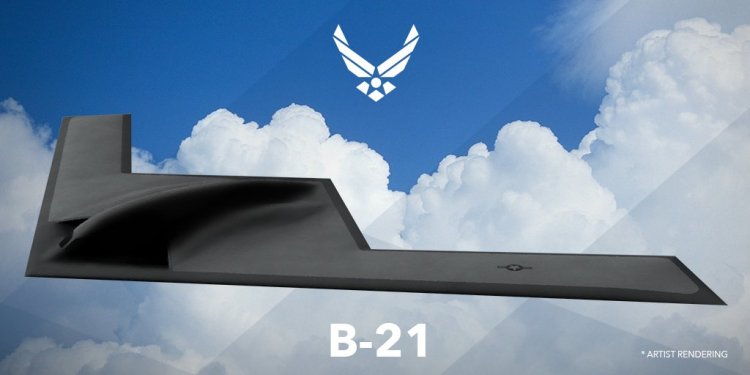
The B-21 stealth bomber, which will replace the B-52 and B-2: “The Air Force initial plans were to acquire 80 to 100 LRS-B aircraft at a cost of $550 million per unit (2010) and envisions some 175 to 200 to be in service eventually.[8][9]” I could find no “total lifecycle cost” but just buying them, let alone operating them, will run over 100 billion.
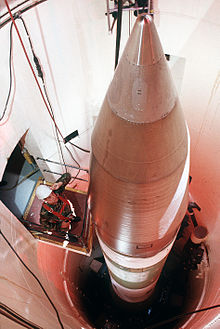
The replacement cost for the Minuteman ICBM is going up: “The Pentagon’s Cost Assessment and Program Evaluation office previously estimated the total cost of the program as anywhere from $85 billion to $100 billion.” In addition there is Reagan’s Star Wars legacy Ballistic Missile Defense (BMD) program, which is hard to pin down, but missile defense in various forms will cost well over 100 billion over the next decade, and more than likely double that.
The first figure of approximately 350 billion as the total cost for 12 new submarines might just as well be applied to bombers, missiles, and warning systems, and this tends to confirm as accurate the many estimates of over a trillion dollars to modernize our strategic deterrent in this decade alone. Again, this does nothing but guarantee the destruction of civilization in the event of a nuclear war. “Nuclear” is the key term and more on this in a moment.
Neoliberalism continues to take control of the world, the examples of which are Bezos, Gates, and Buffet having more wealth than half the population of the U.S. combined. As long as “entrepreneurs” like Elon Musk continue to manipulate the economic system to further their hobbies there will be no progress toward an insurance policy for humankind. In the past I have often used the term “Orwellian” to describe NewSpace due to Musk advancing his vision of a second home for humankind when nothing could be further from the truth. Mars was ruled out as a second home early in the space colonization movement for the obvious reasons. Not enough Solar Energy, no Earth Gravity (only possible with artificial worlds) and Nuclear Energy are all why Mars is a scam. NewSpace is a confidence game peddling shiny starships and space junk.
wiki image
Nuclear technology is the key enabler for expanding humankind into space and only state-sponsored projects on the scale of the Panama Canal or the Hoover Dam will be allowed to use atomic energy. No private permits are going to be issued for craft carrying a couple thousand nuclear devices (bombs) and pulse propulsion is the only practical interplanetary propulsion system that will be available for a long time to come.
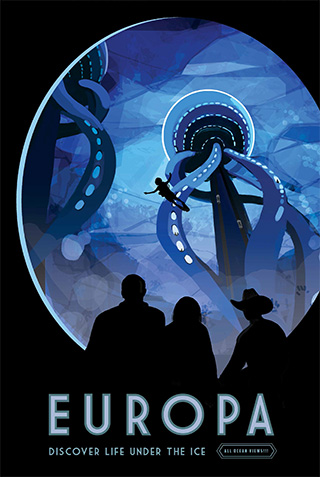
In the linked interview Chris Hedges talks about Christian fascists in America and how “Jesus did not come to make us rich.” Heretical preachers and the pernicious drive to corrupt all things beneficial so only the few can benefit will result, if left unchecked, in the destruction of our species. It is as if those ocean moons conceal monstrous super-intelligent beings influencing our minds from across space- manipulating us and insuring our destruction. H.P. Lovecraft would have wrote his stories set in different locales if he were alive today. This world continues to deteriorate as concurrent political corruption and climate change run their course.
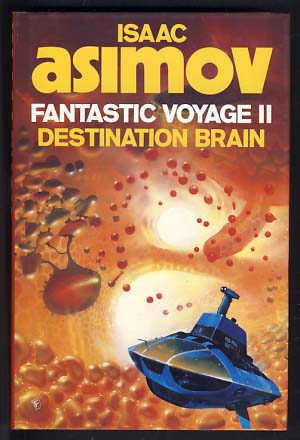
One of a couple dozen projects I have never undertaken is to edit a foreign-dubbed version of “Fantastic Voyage” with subtitles that change the story. The new mission would not be inside a human body but inside an ocean moon or icy body that is acrually a single or group super-brain. Again, I get the feeling we are so messed up as a species that we must be under the influence of some ultra-entity to be so destined for self-destruction.
image from parigi books
At this moment in history, truth is on trial. Not for the first time. In 1974 the checks and balances and a free press worked and the most powerful leader on Earth resigned before being removed from office. The same leader who effectively ended the U.S. drive to expand humankind into space.
“Nixon was unwilling to keep funding for the National Aeronautics and Space Administration (NASA) at the high level seen during the 1960s as NASA prepared to send men to the Moon. NASA Administrator Thomas O. Paine drew up ambitious plans for the establishment of a permanent base on the Moon by the end of the 1970s and the launch of a manned expedition to Mars as early as 1981. Nixon rejected both proposals due to the expense.[204] Nixon also canceled the Air Force Manned Orbital Laboratory program in 1969, because unmanned spy satellites were a more cost-effective way to achieve the same reconnaissance objective.[205] NASA cancelled the last three planned Apollo lunar missions to place Skylab in orbit more efficiently and free money up for the design and construction of the Space Shuttle.[206]”
Image: NASA
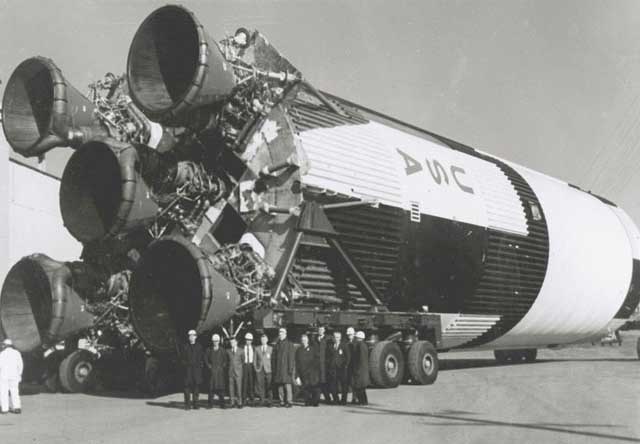
Of those four actions condoned by Nixon regarding space exploration, rejection of a Mars expedition was the only one that would ultimately make sense. Mars, like Low Earth Orbit (LEO), was and is a dead end. Ending visits to the Moon by stopping Saturn V production instead of funding further development to make the vehicle partially reusable like the Shuttle was the really bad mistake, along with the Shuttle program itself. As his predecessor Johnson had feared, the great capability of the Saturn V Super Heavy Lift Vehicle (SHLV) was “pissed away.”
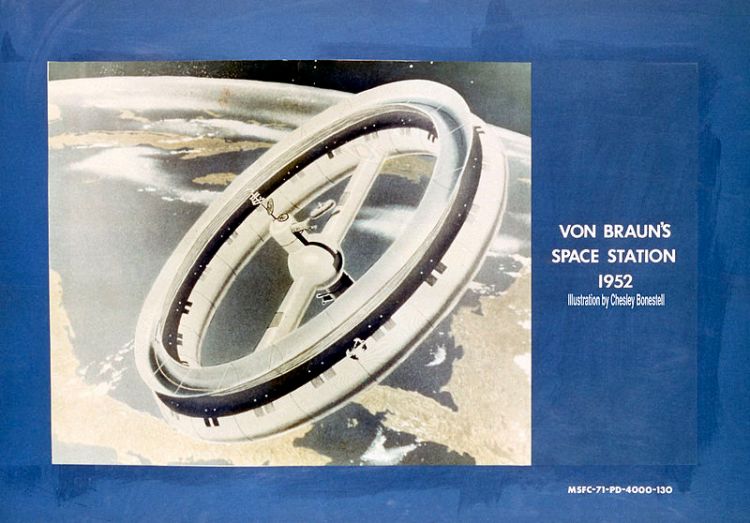
Manned platforms were the best option in terms of Missile Early Warning and keeping the cold war cold but only in Geostationary Earth Orbit and this was a problem. Such “True Space Stations”, touched on by Arthur C. Clarke in his book “The Promise of Space”, were not going to happen without a base on the Moon. This, as the Parker-Dyson-Spudis Continuum makes clear, is only practical with cosmic ray water shielding brought up from the lunar poles. It would seem we have failed to learn anything by our mistakes.
The second time truth went on trial, a quarter century after Nixon, the most powerful leader on Earth should have resigned or been thrown out for being a liar. He was not, after having sold his soul and his party to the god of this world, Mammon. And now, another 20 years later, with that god in control and the 1st amendment crippled (in blatantly Orwellian fashion with “fake news”) the future is not bright. The film maker Michael Moore has said however, there is “a sliver of a chance.” We will see.
In conclusion, I would like to relate a personal experience that might clarify the message I am trying to deliver. In the mid 90’s the big management fad was Total Quality Management (TQM). It came to us mandated and when I was informed I would be getting so many hours of this training I went to the library and read up on it. I read a lot of books back then, at least one a week and sometimes more. Not so much now. I read about the success of the Japanese auto industry by way of TQM and became a believer. Then came the training my organization gave and the big disappointment. The people in charge had decided TQM was a little too radical and watered it down. This, of course, was what Mr. Deming specifically warned against and violated the 2nd of his 14 points. I challenged our instructor on this and was told be quiet and ask no more questions… or leave.
We are all being deceived in some way by a minority of sociopaths at every level of human existence. This is what is going to make us one more silent question mark in the Fermi Paradox. We blindly imitate these creatures and they take advantage of that lack of vision to build on their collective scheme. The Military Industrial Complex, the Medical Industrial Complex (which charges twice as much as any other country) and the Media Industrial Complex, all have us headed toward extinction. Space is the way to escape the trap of our stupidity, our escape from stupid-world. A trillion dollars for a Green New Deal with Space Solar Power as the cure for climate change is that escape. Moving the nuclear deterrent months away into deep space is one way to move in that direction.
I had a spark of hope some years ago when I read Jeff Bezos was looking for a Saturn V F-1 engine in the ocean. What was that all about? It made me wonder if he was actually going to build that piece of hardware so critical to Human Space Flight Beyond Earth Orbit (HSF-BEO). An engine in the 2 million pound thrust range is the basic requirement for a Super Heavy Lift Vehicle (SHLV). Perhaps it might be more accurate to say in the 4 million pound thrust range when considering a single turbopump driving a pair of 2 million pound thrust bells would be even better. This item is of course nowhere to be seen. Instead, we have clusters of smaller engines adding complexity and killing that K.I.S.S. feature so desirable in a SHLV. A sustainable HSF-BEO program must have these “fewer-bigger” engines.
There are essentially two approaches to building a partially reusable SHLV and the 1981 Space Shuttle went with the “big dumb booster” concept being parachuted into the ocean and recovered at sea.
The NewSpace flagship company has demonstrated a redux of the 1993 Delta Clipper and landed back the first stage of their hobby rocket and this second Vertical Take-off/ Vertical landing (VTVL) approach is now seen as more efficient. Whether it is actually cheaper to land back instead of dropping the hardware in the ocean remains to be seen as those numbers are not made public. Far more powerful Aerojet monolithic solid fuel boosters might have made the Space Shuttle more of a success but that did not happen. A separate engine module with some kind of VTVL recovery system combined with different boosters would have definitely seem the Shuttle system still in use with no end in sight.
This “should have been” Space Shuttle is somewhat like the SLS in that it would have been a vertical stack putting different payloads on top. Not putting the payload on top was the worst feature of the Shuttle design. If the Orbiter had turned out to be a bad idea, which in hindsight it absolutely was, then NASA could have gone back to a capsule. With reusable liquid fuel boosters and a VTVL RS-26 module detaching from the core tank the SLS could become essentially what the Space Shuttle should have been. Over half a century ago in 1969 serious design work began on the Space Shuttle and now we have a new expendable Saturn V instead of what should have been developed then. I do not think Blue Origin is doing much better simply because they made that first cardinal mistake of not developing a powerful enough 1st stage engine. Now a word on O’Neill.
Gerard K. O’Neill was a visionary who led teams of smart young people to a set of simple conclusions explaining the best path for expanding humankind into the solar system. The goal was improving our species quality of life and prospects for avoiding extinction in the immediate future. The first conclusion was that living in space instead of on Earth is indeed the practical solution to almost all the problems humanity was dealing with in the 60’s and 70’s and to this day, including climate change. The second conclusion was that no other natural bodies in the solar system are likely to be practical as a second home for humanity leaving only space habitats. The third conclusion was that Space Based Solar Power (SBSP) is the ideal economic engine to build space infrastructure and enable the mass production of miles-in-diameter-artificial-spinning-hollow-moons.
Having mentioned an “economic engine” and inferred the involvement of NewSpace by headlining Blue, which is ostensibly a NewSpace company, I now have to point out Jeff Bezos appears to be riding a neoliberal wave that is in reality a stumbling block to space colonization. This is bad news but not all bad. Billionaire hobbyists are wasteful but then the nature of capitalism and competition is a severely inefficient process. If one of them can get just one thing right then it might make up for all of the damage already done. This ruinous ideology has already set space exploration back at least a decade and that wreckage is accumulating. The primary villain in this story is not Bezos, not yet. It is the other one.
There is no cheap. Smaller rockets using fuel depots are not the miracle that makes everything easy. Mars is not the second home of humanity. Shiny starships and tens of thousands of pieces of space junk are not the future. “Entrepreneurs” are not going to expand humankind into the solar system. This Ayn-Rand-in-Space neoliberal ideology is poison to any progress and all of it is in fact the opposite and enemy of space advocacy. Since the company is using O’Neill’s name on their headquarters, let me make my “O’Neillian views” crystal clear for the leadership at Blue Origin;
Only state sponsored public works projects on the scale of the Panama Canal and Hoover Dam can succeed in expanding humankind into the solar system and effecting an insurance policy against the threat of extinction. Nuclear Pulse Propulsion is a prerequisite and by itself precludes entrepreneurship.
The Public-private Partnership is a guarantee of failure in regards to space exploration as evidenced by the failure of the Space Shuttle, which was sold as a commercial launcher that would “pay for itself.” In contrast, Apollo closely controlled the design and production of the Saturn V and did succeed.
The profit motive is poison to the survival imperative as insurance against extinction is the over-arching goal of space exploration and colonization. While contracted private companies operate to turn a profit this completely corrupts space exploration when the goal becomes exploiting space ONLY for profit.
In my view two New Glenn lower stages could likely replace the present SLS 5 segment SRB’s and this would enable a 150 metric ton payload, even with a stretched SLS core stage modified to allow the RS-25 engine section to separate from the tank structure and VTVL back. As stated at the beginning of this entry, the pressing need is for much larger liquid fuel engines and future SLS boosters should have at most 4 large thrust bells and a central smaller engine for steering and landing. Likewise the core stage tankage might eventually be replaced with a tile-shielded tank like the shiny starship and land back the entire structure. The major stumbling block is the no-escape-system-shiny-starship and tens of thousands of pieces of space junk snake oil now being sold to the public.
What nobody gets is that VTVL and bringing back the second stage are old ideas. Philip Bono of Douglas Aircraft proposed several VTVL vehicles in the early 60’s and the Delta Clipper accomplished VTVL in the early 90’s. Among the first Space Shuttle design concepts in the late 60’s was a winged first stage and second stage with both returning for reuse. It is a farce that the NewSpace flagship company is taking credit for what was done or concepts originated many decades ago- as if it all came straight from the mind of the great one himself. The crew dragon and starship are fundamentally flawed and are following the cheap and nasty path to failure, as shown by the explosion of the former. NASA would be crazy to risk people on a small capsule packed with a ton and a half of hypergolics.
As I continue to relate on this blog, LEO and Mars are both complete dead ends and need to be abandoned in favor of total commitment to a lunar return. I will not go into my disdain for suborbital tourism and instead hope Blue goes forward with Landers incorporating the technology and their tourism enterprise is seen for the very bad idea it is and ends.
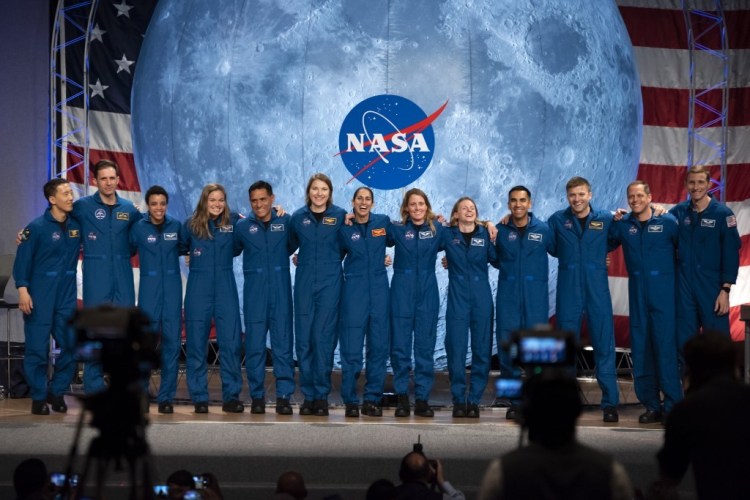
About four and one half years ago one of my first blog entries was “Amazon Women on the Moon.” At that time I inferred a new military service, a “Space Navy” would best be composed of young women in the interest of effecting Survival Colonies on the Moon. I have not changed my mind on this. With an embryo bank of fertilized ovum available a wild guess at the number of females required to rebuild the human race would be a few hundred. With a sperm bank the number of females required goes up. With males and females in pairs this would likely increase to a couple thousand if interbreeding problems are to be avoided. The number of females necessary and how to sustain them off-world is an interesting problem. Our newest graduating class of astronauts, nicknamed “the turtles”, has six females and seven males.
Image by Mark Felix
This is the extremely important question: if Earth is suddenly uninhabitable could the human race survive? If an asteroid or comet several times the size of the previous dinosaur killer were to hit Earth in just the right place tomorrow only microscopic life would survive. That some underground facility or nuclear submarine with a band of courageous survivors might repopulate the Earth is a great science fiction story but not plausible if the surface and oceans were nearly sterilized. The best place to survive such an extinction event would be off-world.
A planet killer was, by the way, the plot of the movie “Armageddon”; from https://grantland.com/hollywood-prospectus/bragging-rights-armageddon/ “Over the years, the big-budget story of an asteroid on a collision course with Earth and the lovable oil-rig roughnecks tapped by NASA to do something about it has become its own shorthand. Armageddon means explosions, it means ’90s Hollywood, it means emotional manipulation — “That man’s not a salesman. That’s your daddy” — and it means that unholy union of Jerry Bruckheimer and Michael Bay. Armageddon makes people roll their eyes. “Movie isn’t actually the best word to describe ‘Armageddon,’” wrote Janet Maslin in the New York Times in 1998. “More accurately it’s a product, a feat of salesmanship.”
The movie “Deep Impact” was much better than, but unlike “Armageddon”, had the caveat humankind might survive the worst case. Besides a planet killing impact another worst case scenario is the engineered pathogen. I have argued on a few forums, before I was banned from them for being a critic of NewSpace, that a 100 percent lethal pathogen is one valid reason to establish Survival Colonies. There was always some rabid neoliberal Ayn-Rand-in-Space type who would reply some humans would always have some “natural resistance” to the pathogen so life would go on. Not true of course.
After a planet killer and engineered pathogen comes the possibility of a super-volcano epic coating the surface of the planet in ash, contaminating the atmosphere and poisoning the oceans, and freezing the surface of the planet by blocking sunlight. If the epic was intense enough it would have the same effect as the planet killer. Of the three I would say the engineered pathogen is the biggest danger. I listed it second only because an impact is far more likely to depopulate the planet and can be most easily guarded against. While a large impact might leave a small remnant alive it would make those few far more vulnerable to a secondary plague or other event ending us. As I have stated several times, any extra-terrestrials observing our extinction by way of an impact or volcanic epic would remark we were just too stupid to survive. Natural selection.
Unnatural selection by way of purposefully murdering each other with an engineered pathogen is, in my view, the biggest danger. A lesser impact or single super-volcano that destabilizes civilization and leads to nuclear war could end with a last ditch biological agent being released. Even a Carrington Solar Event could be the catalyst of extinction. Climate Change will doubtless have unintended consequences we cannot foresee now that could likewise set humankind up for a catastrophe leaving us vulnerable to a secondary event extinguishing our species. Our optimism bias conditions us to ignore such possibilities. We believe we will somehow be lucky enough to survive whatever comes our way. This could end us.
The views I have expressed on this blog over time have not changed much and the original concept of women in space as insurance for the human race has not changed at all. We know eggs are viable after being frozen for a quarter century and woman in their 70’s have given birth so it is not unreasonable to expect women tasked with restoring the human race might produce around ten more females each. The question is where these children would be born. If there are giant lava tubes under the Moon this could be the answer.
Graphic from Purdue University
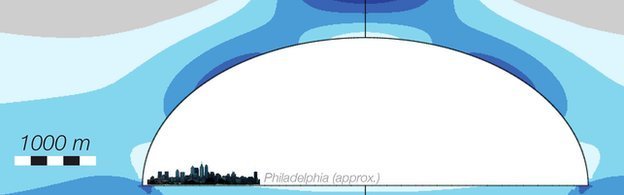
A lava tube with an interior over 3000 feet in diameter would allow for a circular train generating artificial gravity to be constructed, what I call a “sleeper train.” Such trains, perhaps stacked on top of each other to utilize available space, might allow for a small population to survive and even thrive on the Moon. On icy bodies such as Ceres and the ocean moons of the gas and ice giants it might be even easier to effect these constructs. Such distant outposts are unlikely unless Survival Colonies under the Moon are in need of water or volatiles. It is possible that resources on the Moon could be limited in which case expanding outward would eventually be necessary for sustaining the lunar population.
If the Earth was to suddenly die, this kind of existence in small subsurface communities might be the only viable path since the massive resources we now enjoy to support building true space habitats would not be available. Slowly rebuilding the population by expanding these kinds of communities into the solar system until a workforce and resources were available for building habitats might take centuries. In the event of a catastrophe on Earth it would be far better to already have or be in the process of setting up lunar factories enabling miles-in-diameter-artificial-spinning-hollow-moons. Gerard K. O’Neill envisioned the Earth eventually becoming a place people went visit like a national park with almost the entire human race living in space.








 Geekwire photo- Alan Boyle
 Ice on the Moon